
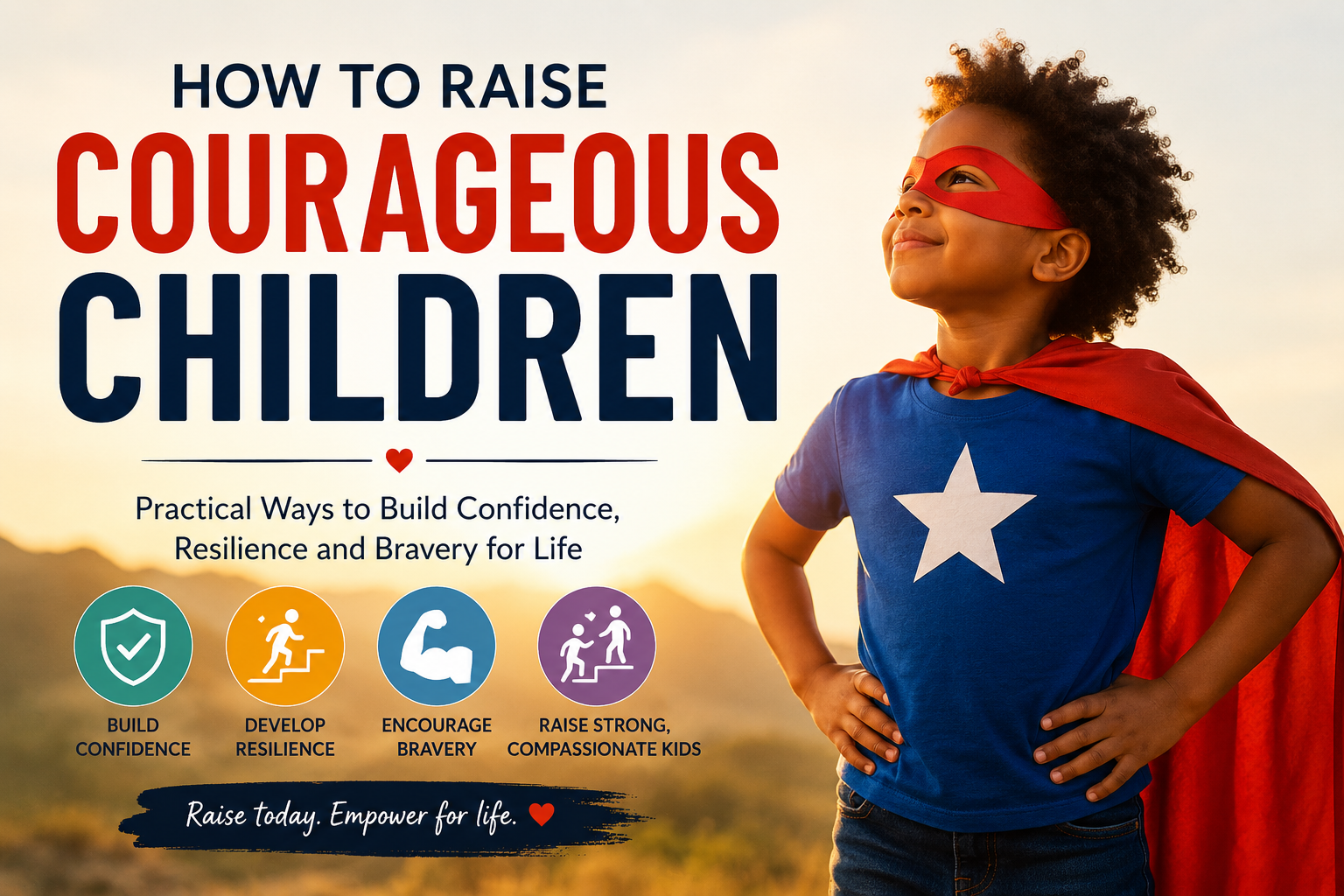
Every parent dreams of raising a child who can face life’s challenges with confidence instead of fear. Courageous children are not born fearless; they are raised by adults who teach them how to face fear, make wise decisions and keep going even when life becomes difficult.
Courage is one of the most valuable qualities a child can develop. It helps children stand up for what is right, resist peer pressure, recover from failure and pursue their dreams despite obstacles.
In today’s rapidly changing world, where children face increasing social vices, online influences, bullying and uncertainty, courage has never been more important.
The good news is that courage can be taught. Parents, grandparents, teachers and caregivers all play a vital role in helping children develop this essential life skill.
This guide explores practical and effective ways to raise children who are brave, confident and emotionally strong.
What Does It Mean to Be Courageous?
Many people think courage means never feeling afraid. In reality, courage is choosing to do the right thing even when fear is present.
A courageous child may still feel nervous before speaking in class, trying a new sport or making new friends. However, instead of allowing fear to control them, they learn to move forward despite their anxiety.
True courage includes:
- Standing up for what is right.
- Telling the truth even when it is difficult.
- Trying again after failure.
- Admitting mistakes.
- Defending someone who is being bullied.
- Accepting challenges instead of avoiding them.
- Believing in themselves during difficult moments.
These qualities can be nurtured from an early age.
Why Courage Matters in Childhood
Children who develop courage often grow into adults who are emotionally healthy and resilient. They are more likely to:
- Build healthy relationships.
- Handle disappointment well.
- Become independent thinkers.
- Make responsible decisions.
- Resist unhealthy peer pressure.
- Take positive risks that lead to growth.
- Develop leadership qualities.
- Achieve personal and professional success.
Without courage, children may become overly dependent on others, fear failure or avoid opportunities that could help them grow.
Teach Children That Fear Is Normal
One of the biggest mistakes adults make is telling children not to be afraid.
Fear is a natural emotion that everyone experiences. Instead of saying, “Don’t be scared,” teach them that feeling afraid is completely normal.
Explain that every successful person has experienced fear at some point. What separates successful people from others is their willingness to act despite being afraid.
Children who understand this are less likely to feel ashamed of their emotions.
Be the Example They Follow
Children learn far more from what they observe than from what they are told.
If parents panic during problems, avoid difficult conversations or constantly complain about challenges, children often adopt the same behaviour.
Instead, demonstrate courage by:
- Remaining calm during stressful situations.
- Facing problems with confidence.
- Apologising when you are wrong.
- Trying new things yourself.
- Showing determination when life becomes difficult.
Children who regularly witness courage at home naturally begin to imitate it.
Allow Children to Solve Their Own Problems
Many parents rush to rescue their children from every challenge.
Although this comes from love, it can unintentionally teach children that they cannot handle difficulties on their own.
Instead, encourage them to think through problems.
Ask questions such as:
- What do you think you should do?
- What are your options?
- What could happen if you choose this solution?
Helping children develop problem-solving skills increases confidence and independence.
Praise Effort Instead of Perfection
Children become courageous when they know their worth does not depend on being perfect.
Rather than saying:
“You are so smart.”
Say:
“I am proud that you kept trying.”
Instead of praising only success, celebrate persistence, determination and improvement.
This teaches children that mistakes are part of learning rather than signs of failure.
Encourage Independence
Giving children age-appropriate responsibilities helps them believe in their own abilities.
Allow them to:
- Pack their school bag.
- Make simple decisions.
- Help prepare meals.
- Manage small amounts of money.
- Complete homework independently.
- Solve disagreements respectfully.
Every successful experience builds confidence.
Let Them Experience Failure
Failure is one of life’s greatest teachers.
Parents sometimes try to remove every obstacle from a child’s path, but children who never experience failure often struggle as adults.
When children fail:
- Listen without judgement.
- Help them understand what went wrong.
- Encourage them to try again.
- Focus on lessons learned instead of blame.
Children who recover from setbacks become emotionally stronger.
Teach Them to Speak Up
Courage also means finding your voice.
Encourage children to:
- Ask questions.
- Express their opinions respectfully.
- Say “no” when something feels wrong.
- Tell trusted adults if someone hurts them.
- Stand against bullying.
Children who can communicate confidently are less likely to become victims of manipulation or abuse.
Avoid Overprotecting Your Child
Protecting children is important, but overprotection can limit their growth.
Children need opportunities to:
- Explore.
- Take healthy risks.
- Learn from mistakes.
- Build confidence independently.
Allowing children to experience manageable challenges prepares them for adulthood.
Build Emotional Strength
Emotionally strong children cope better with fear.
Help children identify and express emotions by asking questions like:
- How are you feeling?
- Why do you think you feel that way?
- What could help you feel better?
Teaching emotional intelligence helps children respond calmly instead of reacting impulsively.
Encourage Healthy Risk-Taking
Healthy risks help children discover what they are capable of.
Examples include:
- Trying a new hobby.
- Entering a competition.
- Performing on stage.
- Joining a sports team.
- Learning to swim.
- Making new friends.
Each new experience expands their confidence.
Teach Honesty
Honesty requires courage.
Children should know that telling the truth is always better than hiding mistakes.
When children admit wrongdoing, avoid harsh punishment that discourages honesty.
Instead:
- Thank them for telling the truth.
- Discuss the consequences.
- Help them make things right.
This creates trust while reinforcing integrity.
Help Them Build Resilience
Resilience allows children to recover after disappointment.
Teach them that setbacks do not define them.
Remind them that:
- Every mistake teaches something valuable.
- Every challenge develops strength.
- Every failure creates an opportunity to improve.
Encourage Reading About Brave People
Stories shape character.
Introduce children to biographies and inspiring stories about people who showed courage in difficult circumstances.
These stories demonstrate that ordinary people can achieve extraordinary things through determination and bravery.
Reading also expands children’s imagination and inspires positive values.
Teach Them to Help Others
Acts of kindness build courage.
Encourage children to:
- Stand up for classmates.
- Include lonely children.
- Help neighbours.
- Volunteer in community activities.
- Share with those in need.
Serving others develops compassion and confidence.
Avoid Comparing Your Child to Others
Comparisons damage self-esteem.
Every child develops at a different pace.
Instead of saying:
“Why can’t you be like your brother?”
Say:
“I believe you can improve.”
Children become courageous when they feel accepted for who they are.
Create a Home Where Questions Are Welcome
Children become more confident when they know they can ask questions without fear of ridicule.
Encourage curiosity.
Listen patiently.
Answer honestly.
Children who grow up in supportive environments become better thinkers and decision-makers.
Teach Faith, Hope and Positive Thinking
For families of faith, teaching children to trust God during difficult times can strengthen their courage.
Prayer, gratitude and hope provide emotional stability during life’s uncertainties.
Even for families who are not religious, teaching optimism, gratitude and purpose helps children remain hopeful during challenges.
READ ALSO
- Why Relationships Fall Apart Even When Love Is Present
- Respect in a Relationship: What It Really Means and Why It Matters
Celebrate Small Victories
Confidence grows one success at a time.
Celebrate moments when your child:
- Speaks confidently.
- Tries something new.
- Apologises sincerely.
- Faces a fear.
- Shows kindness.
- Solves a difficult problem.
Small victories eventually create great courage.
Raising courageous children is one of the greatest gifts parents can give. Courage is not about eliminating fear but teaching children to move forward despite it.
Every challenge they overcome, every mistake they learn from and every act of honesty or kindness helps shape their character.
Children who grow up believing in themselves, knowing they are loved and understanding that setbacks are opportunities for growth are better equipped to face the future with confidence.

